booleansplit.com

photos, tips, tricks, and thoughts from an avid amateur photographer


Posts tagged Pentax

It’s the lens that matters most

new toy

I have been thinking a lot lately about lenses and I thought I’d share some of my thoughts. I’m planning on doing a more specific lens comparison but I will save that for a later date. For now I just want to talk about my general thoughts about lenses and their applications. Why is this important? Well, as you begin to expand your collection of lenses you will soon learn that what you have really invested in is a lens system and not a camera system. Quality glass (lenses) will last a lifetime and will likely outlast the latest whiz bang technology of the latest DSLR you just bought. Hopefully by sharing my thoughts and experiences some of you will have an easier time of navigating the confusing quagmire that comes along with upgrading your DSLR’s optics and make the most out of your investment.

For this discussion I am going to primarily refer the standard 35mm film focal lengths of lenses. I will add APS-C (1.6X) focal length or 35mm equivalents in brackets [ ] where appropriate. In general, if I say 50mm I mean 50mm focal length on a 35mm film camera or full frame sensor DSLR. The reason I am doing it this way is that the 35mm equivalent focal length of a lens describes its field of view (FoV) more accurately than APS-C (or DX) format measurement does. If any of this is confusing to you I strongly suggest reading the Wikipedia page on the APS-C format before continuing.

What would I buy?

Let’s imagine for a moment that money is no object and I could fill my camera bag with whatever I wished. What would that be? While we’re in dreamland, let’s assume that the camera I’ll be shooting with all this fictional glass is Canon’s awesome new 5D Mark II. Here are the lenses I’d want to have available and why (I’m sure I could find similar choices for Nikon but I know the Canon stuff better):

  • 17-40mm f/4 L wide angle zoom. Why if money is no object would I choose the 17-40 f/4L over the faster 16-35 f/2.8L? Simple, the extra speed the 2.8 provides is not worth the extra weight.  A super wide lens like this is something I’m most likely to carry around with me while traveling and the lighter it is the more likely I’ll take it with me. Also, the idea of wide angle shots is usually to capture as much detail as possible (think streetscape, landscape or 5-year-old birthday party action) so a larger aperture is just going to work against you. I’m sure there are specific situations where the extra speed of the 16-35 f/2.8 would come in handy but for me I’d most likely choose the slower and lighter option here and just dial up the ISO as needed in low light situations. The only caveat here is if I was shooting an APS-C body. Then the 16-35mm [26-56mm] would make a logical upgrade for the standard 18-55 kit lens. See my comments below for APS-C wide angle lens thoughts.
  • 35mm f/1.4 L wide angle prime. I really like having a fast wide angle lens for available light shots of the kids around the house and for other times when a 50mm lens just doesn’t provide quite enough FoV to capture a scene the way I want to. In fact, while a 50mm lens best reproduces the magnification the human eye sees, a 35mm lens better represents the field of view our eyes can see (in focus). Having never owned a fast 35mm I can only guess but I bet it would end up being my standard lens mounted on my camera 90% of the time. Becomes a medium angle lens [56mm] on an APS-C camera.
  • 24-105 f/4 IS L zoom. This is a close call. The 24-70 f/2.8 L is a very tempting choice. I have rented both lenses and they are both superb. The 24-105 f/4 is the one I’d put in my bag though because money is no object here and I’m going to have all these other lenses to choose from. Huh? Well, if I could only have one lens it would be the 24-70 f/2.8 L. Easy. However, if I’m going to be toting around a bag full of glass the 24-105 f/4 just makes more sense. It is lighter (see argument for 17-40 above), has a wider zoom range (better for “walking around”) and has IS. There are times when a slower shutter speed (1/30-1/4 second) is what you need to capture action and IS is the only way to get get these shots w/o the hassle of a tripod. The 24-105 focal range means I would have a stabilized lens that covers all wide to medium telephoto applications. Also an awesome all-purpose [38-168mm] lens on APS-C bodies (though lacking a bit on the wide end).
  • 50mm f/1.4 USM prime. Here I go again cheaping out even though money is no object. Yes, Canon’s 50mm f/1.2L is the Mother of All fiddies. However, from what I can tell it is not that much better than the non-L 50 1.4 but it is that much bigger and heavier (and somewhat slower to focus). I know this whole weight thing is getting long in the tooth, but for the way I shoot it is important. When I travel I typically head out on foot to explore which means I have to carry my gear on my person. After spending an entire days lugging an overloaded camera bag around Hong Kong and Paris I can tell you that less is definitely more. The main problem is that you get to these wonderful places and you are faced with making the choice of picking one or two lenses and hoping for the best- or lugging your entire kit with you. I’ve done both and can say that whatever the choice the weight of what you carry always remains an issue. Studio, sports and landscape “trunk” photographers are the only ones that don’t have issues with how much stuff weighs. As for me, I carry my camera almost everywhere (including on my bike) so I want to find the best balance between size and performance. Here, the 50 1.2 just doesn’t make sense for me. YMMV. See fast prime suggestions for APS-C cameras below.
  • 100mm f/2.8 USM Macro. You can’t beat a dedicated macro lens. I like the 100 f/2.8 on a full frame body as it provides the right mix of magnification and stand-off distance from the subject. I like to shoot most of my macro shots at arm’s length. Canon’s 50mm f/2.5 Macro is OK but I have found that I often have to get too close with the camera to get the magnification I want (often blocking out the available light). Meanwhile, Canon’s 180mm f/3.5 L Macro is an awesome lens but its longer focal length pretty much requires a tripod to get decent results. APS-C photographers should check out Canon’s EF-S 60mm f/2.8 Macro.
  • 70-200 f/2.8 IS L zoom. This is one of photography’s greatest lenses. Perfect for portraiture, sports action, school plays, wildlife, the occasional macro shot, and pulling in details in just about any situation. The f/2.8 version gets the nod over the f/4 version even though it is larger and heavier. You’ll need the speed to catch those low light shots and the shorter DoF will make your subjects pop. My bet is that you’ll rarely shoot this lens at anything other than wide open. Works great on both full frame and APS-C bodies.
  • 400mm f/2.8 IS L super telephoto. Here’s where the “money is no object” part really pays off. I have always wanted a fast super telephoto for getting in tight to stuff you can’t get up close to. I’m thinking sports car racing, school plays, African safaris, and the occasional full moon. Not a lens I would carry around in my bag but definitely one I’d like to have if the situation warranted it. I’d skip the 100-400 f/4.5-5.6 IS L in favor of lens speed and ultimate image quality. Have an APS-C camera? Then your 1.6X crop factor makes this monster a 640mm f/2.8 equivalent for no extra charge ;-)

OK, so back to reality for a second. Most of us are amateurs and can not justify dropping $15K on our camera gear. Therefore, what should you take away from all of this?

  • Buy the best lenses you can afford. It will outlast your camera and you’ll never find yourself second guessing a lens purchase. If you find you don’t use a lens enough to justify keeping it, you’ll also find that pro-quality glass earns top-dollar on the used market. If you are thinking of dropping $180 on a Canon 28mm f/2.8 to get a wide angle prime do yourself a favor and save your pennies until you can step up at least to the $420 28mm f/1.8 USM. What you will gain in ultimate image quality and versatility will pay off many times over in your photographs. That 28 2.8 will end up in a drawer somewhere collecting dust as soon as you realize that its useless below f/4 anyway. Trust me. I know.
  • Do your research. This may directly contradict what I just said as you will find bargains out there. The non-L 50 1.4 I mentioned above is one example. In fact, at only $90 brand new Canon’s 50mm f/1.8 II is probably the best value in lenses anywhere. (Check out dpreview.com’s new review of the Canon EF 50mm f/1.8 II.) That being said, do your research so you know what you are getting. Personally, I would wait and save up for the 50 1.4 just to get the speed and silence of the USM focus motor. Also, the 50 1.4’s 8 bladed diaphragm produces far superior bokeh and starbursts when stopped down than the 50 1.8’s 5 bladed diaphragm. Buy the 50 1.8 II and you’ll be perfectly happy with it until you shoot one of the USM lenses. Then you’ll start beating yourself up. The best places to research are websites that actually test equipment. I prefer the-digital-picture.com, photozone.de, and dpreview.com because they use standardized testing procedures. There are blogger/photographers (like me) who “test” lenses and write their opinions about them. Take those with a grain of salt but they are usually pretty useful. Be wary of discussion forums and Amazon.com review ratings and the like. These are typically very unreliable sources for quality information.
  • Pick up a fast prime lens. My recommendation is a 50mm equivalent focal length at f/1.8 or faster. If you are shooting an APS-C sensor camera this is going to be tough. Technically you’ll need a 31mm lens to get an equivalent 50mm focal length. Sigma is one of the only lens manufacturers making a lens like this. Their 30mm f/1.4 EX DG HSM looks like it fits the bill perfectly. However, it’s relatively pricey ($500) and tests say it is very soft off center. Pentax’s SMCP-FA 31mm f/1.8 AL Limited is an ideal choice for Pentax shooters but at $800 you’ve got to be mighty deep into Pentax. 35mm focal length lenses are probably your best bet. Unfortunately, truly fast versions are usually pricey and hard to come by (see the $1,200 35mm f/1.4 L above). If you can’t find a 30-35mm f/1.8 or faster lens do what most everyone else does and put your money into a fast 50mm. It’ll end up being a bit long on an APS-C sensor camera [80mm] but at least you can start exploring the Wonderful World of Bokeh and available light photography.
  • Consider an ultra wide angle zoom. I’m not talking fisheye. I am talking at least 15-17mm on the wide end, though. A super wide angle lens opens a whole new world of photography for less money than most lens investments. I’ve already shared my feelings above about Canon’s 17-40 f/4L and 16-35 f/2.8L lenses for full-frame applications. However, neither of these fit the bill for an APS-C body. Look for something around 10mm [16mm] on the wide end. There are a number of choices depending on your camera so do your homework. I hear Canon’s EF-S 10-22 f/3.5-4.5 USM is superb. I’ve owned Sigma’s 10-20 f/4-5.6 EX DC lens and thought it was great.
  • Avoid super zooms. These are the 18-200mm+ do-it-all lenses that are so popular at camera stores and on-line discounters. Sure, the idea of one lens for every situation seems like a good idea, but the reality of making such a lens results in some pretty significant compromises in lens speed, image quality and usability. While prime lenses will always give you the best ultimate image quality they may not be the right choice for every situation. However, you will be much better off if you limit the range of your zooms and follow suggestion number one above. In my experience you can get very decent results from mid-level primes but anything other than top-of-the-line zooms are likely to suffer in more than one area (speed, sharpness, vignetting, chromatic aberrations, etc).
  • Save up for that super telephoto. Don’t waste your money on bargain brand telephoto lenses. There are a lot out there (Phoenix) but most of them aren’t worth the plastic they are made of. If dropping $5K on a lens doesn’t seem like it will ever fit into your plan then…
  • Rent before you buy. So, if you’re following my advice and buying the high dollar glass maybe you should take it for a test drive before you take the plunge. There are a number of camera equipment rental services out there. I have only rented locally while I am traveling so I can’t recommend any of the on-line services, but I hear good things about many of them. Also, renting is a great way to get those awesome once-a-year close-up Christmas school program photos of Jr. from the back row of the gymnasium. No sense putting that $5K lens in the closet until next year, right?

I hope this helps clear up the mystery of lens selection a bit for those of you who are just starting to wade into the hobby. Feel free to post specific questions in the comments or drop me an email. Those of you who are more experienced please take a moment to share your thoughts on the subject as well.
Christmas tree photo tutorial

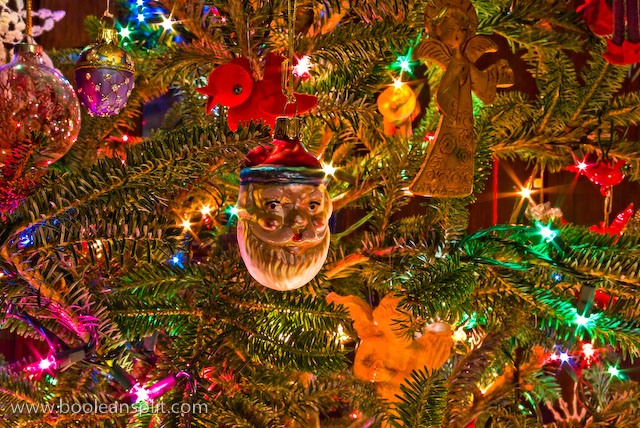
Christmas ornament detail

With Christmas just a couple of days away there is no doubt that many of you have been enjoying taking artistic photos of your Christmas tree and other Holiday decor. All those colorful and tiny lights make perfect bokeh fodder. And highly processed detail shots like this are also fun.

Problem is, many of us (present company included) forget to take good documentary photos of our holiday decor that we can pull out and reminisce over with the grand kids 30 years from now. While all those artsy detail shots are nice, none of them capture the full majesty of your 2008 Holiday decor. Going through my photos a few days ago I ran across this image I took of my mom’s Christmas tree back in 2005:

IMG_0096_2

This is one of my favorite Christmas photos of all time. Even in black and white (shot in B&W mode so there is no color version) I can totally feel the warmth of the twinkle lights and even smell the fresh pine fragrance of the Frasier fir tree. With this in mind I decided to figure out what makes good Christmas tree photos and do a bit of a tutorial aimed at DSLR users while I was at it.

Step 1: Turn off your flash!

flash tree

Out of the box in Program Auto mode just about all DSLRs are going to pop the flash in an attempt to achieve “proper” exposure. While this may accurately capture the image, I doubt that anyone will find the results very warm and inviting.

Switch your camera into Program mode and turn off the flash. With the flash off you’re likely to get something like this:

no flash, default settings

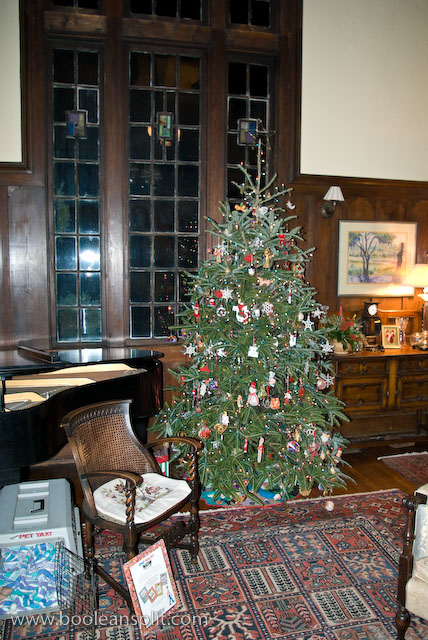
This is a 1/8 second hand-held exposure at f/3.5 and ISO 400. I actually had to dial in +1EV of exposure compensation because my Pentax K10D’s matrix metering was underexposing the image considerably trying to compensate for the brightness of the tree lights and lamp to the right just off frame. While the image more accurately captures the look and feel of the decorated tree, it isn’t very dynamic and compelling.

Steps 2 & 3: Get out the tripod and close down the aperture.

small aperture, long exposure

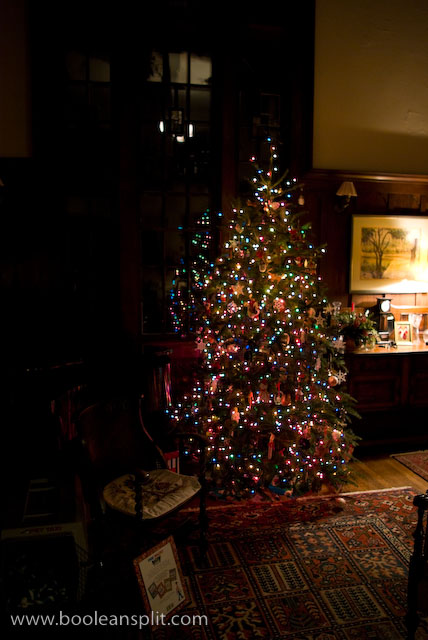
This shot is essentially identical to the previous shot except it is a 15 second exposure at f/16 and ISO 100 (shot in Aperture Priority mode). The small aperture does three things here. First it creates all those dreamy starbursts. Second, and more notably, it forces a long exposure. This long exposure time pulls in more ambient light, giving the entire scene more apparent dynamic range. Finally, it sharpens up the details. Zooming into this image you will find much crisper detail than the rather soft previous f/3.5 shot. As a bonus, using a lower ISO means richer colors, better detail, smoother gradients, and less noise.

Step 4: Attend to the details.

improved details

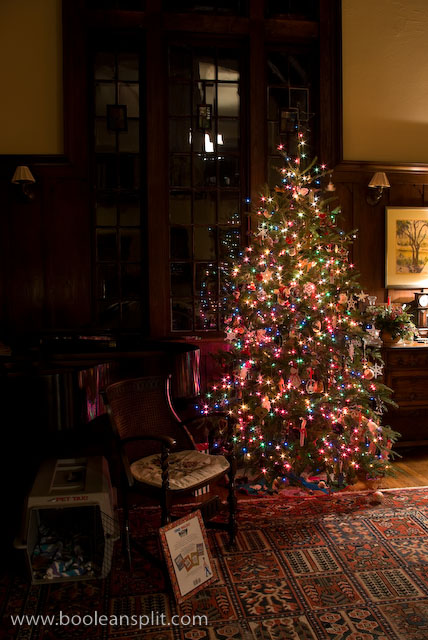
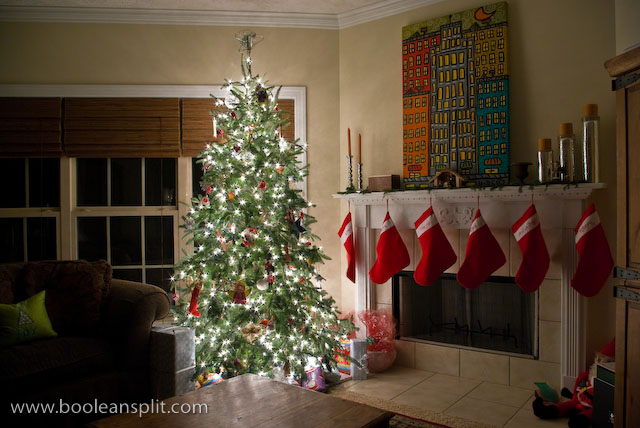
While the previous shot had come a long way from the Program Automatic blown-out flash shot, I felt there was still room for improvement. I didn’t like the reflections in the windows behind the tree coming from the upstairs lights and the lamp to the right was a bit harsh. Also, there were a few unsightly items cluttering up the foreground of the earlier shots and I wanted to add a better sense of grandeur to the shot.

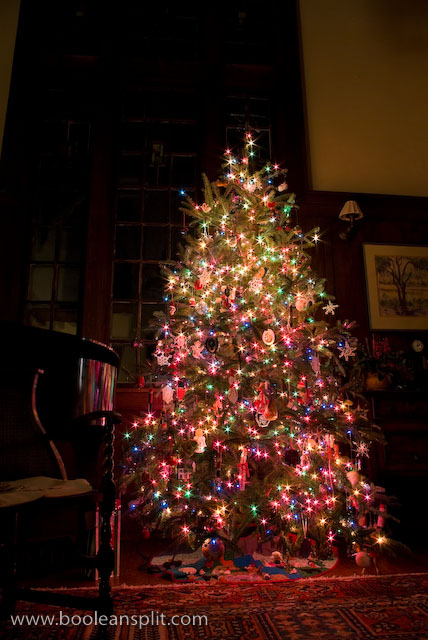
For this final shot I turned off all the lights in the house except for a single 60 watt desk lamp behind the camera to add just a tad of ambient fill to the high ceilings. I moved the dog kennel and Where’s Waldo book. I then repositioned the tripod closer to the tree and lower before zooming out wider to exaggerate the scale of the tree and height of the room. This ended up being a 10 second exposure at f/16 and ISO 200- I bumped the ISO to 200 because the rest of the family was complaining about sitting in the dark during all my 20+ second shots ;-)

RAW file post processing in Lightroom was limited to setting the white balance (tungsten) and dialing in a bit of Sharpness, Clarity and Vibrance. You may want to tweak the Recovery slider a tad to compensate for any blown-out Christmas lights from the long exposure.

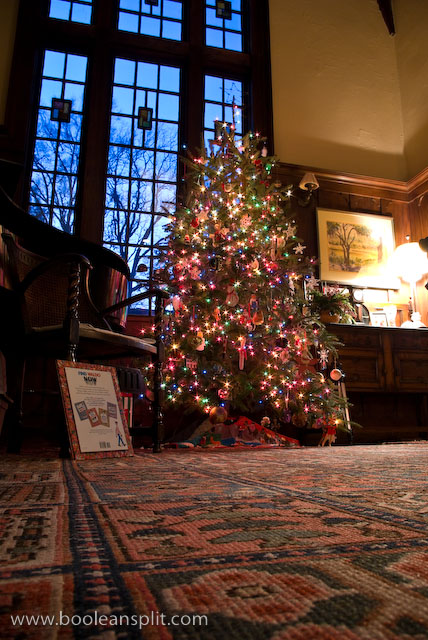
While I recommend shooting your Christmas tree photos at night, depending upon the situation, decent results can be achieved during the day. The wall of windows behind the tree here made daytime shots pretty much impossible. However, waiting until dusk I got this shot which was pretty nice:

Christmas tree at dusk

Step 5: Share!

my Christmas tree

This is a picture of my Christmas tree I took last week using the small aperture/long exposure technique described above. The photos for this tutorial were shot at my in-laws house. When you travel to visit friends and family this Christmas be sure to pack your camera and tripod. Take pictures of your non-photographer friends’ trees and send them a copy as a Holiday treat! Tis the season of giving, right?

Merry Christmas!!

Christmas table centerpiece photo

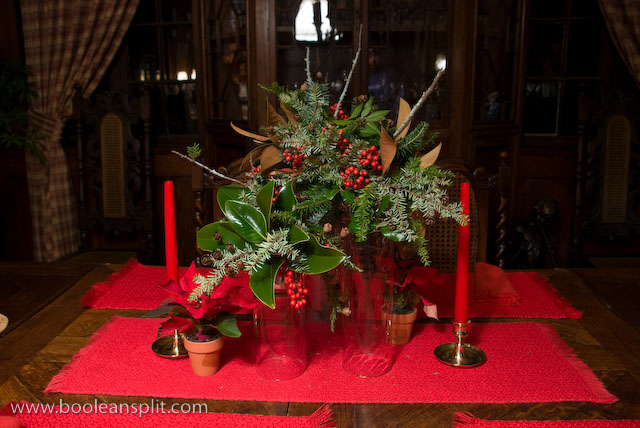
Christmas centerpiece arrangement

My father in-law asked me to take a picture of his Christmas table centerpiece arrangement so he could e-mail it to an out of town friend. My attempt at a quick snapshot didn’t meet my with my photographic standards so I spent the next hour playing with lighting to get the final shot above. This was a very challenging shot as I had to make do with what lighting I could find in the house. Here’s how I did it:

first shot with ambient light only

First of all, my in-laws’ house is DARK. Dark walls. Dark floors. Dark furniture. Dark lamps. You get the idea. Plus, it was night so the wall of windows to the left of the subject weren’t helping. Of course, I could have waited for morning but I always like a good challenge. Plus, I figured that if I got it right, a night shot would better capture the elegant and rich warmth of the table setting.

My first test shot was attampted with nothing but the incandescent  lamp light filtering in from the living room behind the camera. This required a 6 second exposure at f/8 and ISO 400 (a tripod was used so my K10D’s IS was OFF). I used f/8 to ensure that the entire arrangement was in sharp focus while the background was blurred a bit. I like the f/8 shot because there is enough background detail to clearly place this shot in my in-laws dining room while the subject focus was nicely isolated. The lighting in this first shot was too flat. I wanted more subject isolation so I grabbed a floor lamp and placed it to the left of the camera and tried again:

second shot w/ floor lamp at eye level

set-up for second shot

This set-up provided better subject isolation via lighting but the shadows seemed a bit harsh. I played around with a few combinations of settings and finally settled on 4 seconds at f/8 and ISO 100 but was still not happy with the results.

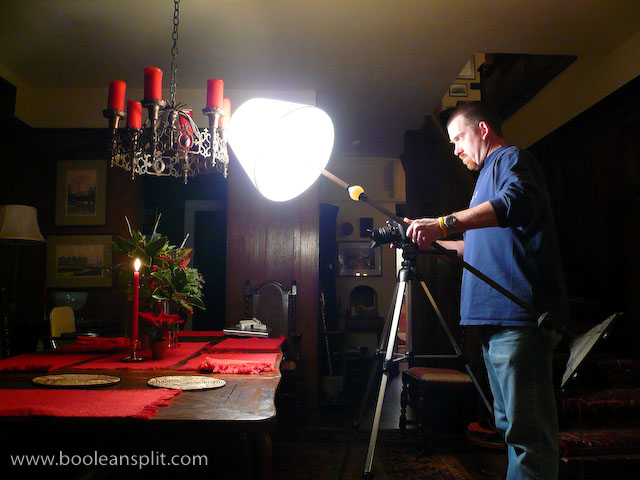
Recalling some studio shots that I did not long ago where I held a shaded lamp directly above my subjects, I decided to try holding the lamp above the centerpiece just out of the frame. I also turned off all the lights in the living room and opened the glass doors on the china cabinet behind the arrangement to eliminate the reflection of the lamp. Finally, I lit the candles to add another level of detail and ambiance to the shot.

set-up for final shot

This set-up is what I used for the final shot. (Note use of lens hood to quell flare). I sped up the ISO to 200 to get a 1.6 second exposure at f/8. This was mainly because the lamp was a bit heavy to be holding up like this for 6 seconds but also because a shorter exposure helped cut down on the ambient light bleeding in to the background. While the shutter was open I slowly arced the lamp from left to right to paint the entire arrangement and blur the shadows. The resulting image (top) ended up with shadows that were much softer at the subject with a nice gradual fall off of the light into the background. I couldn’t have done much better with an actual soft box in a studio ;-)

With a nice looking exposure I pulled the image into Lightroom to adjust the white balance (2625K) and apply my standard Sharpness (14), Detail (51), Clarity (30), and Vibrance (+25) settings. I also pushed the Recovery up to 73 to help correct some over exposure of the reds and knock back the highlights on the shiny green leaves a bit. A bit of final cropping (always leave room for cropping!) and off the image went to my father in-law.

DIY Pentax DSLR cable release

[Originally posted on my personal blog on Oct. 8, 2008]

There are a number of resources out there for creating your own electronic remote shutter release for Pentax DSLRs with a 2.5mm remote port. I don’t use a remote very often as the 2 second self timer seems to work fine for 99% of my photos under 30 seconds. However, longer bulb exposures require a remote. So, I picked up a generic cellphone headset at the dollar store and wired it up to a toggle switch I had laying around. (It seems this design also works for Canon Digital Rebel cameras with 2.5mm remote ports.)

There are 3 wires inside one of these cables: white, red & black. (Four conductor versions will not work with a Pentax so make sure the 2.5mm plug has 2 silver bands and not 4). All I did was cut the cord, strip back the outer jacket to expose the 3 conductors then plugged it in to the remote port on the camera and shorted the red and white wires to the black one to figure out which controlled what function on the camera. In this case the white wire triggered the shutter and the red caused the camera to auto focus. I connected the white wire to one side of the toggle switch with a small acorn nut and the black to the other side. I drilled a couple of holes in an old pill bottle to make a housing for the assembly.

superior ergonomics of the pill bottle housing

In standard shooting mode flipping the switch to the “on” position releases the shutter. You have to return the switch to the “off” position to review the shot and take another (ie: the shutter only fires when the switch is in the “on” position). For bulb exposures you simply flip the switch to “on” to open the shutter then flip it back to “off” to close it. A momentary switch would facilitate non-bulb shutter releases but I found the toggle switch to be perfectly workable as long as you remember to turn it off after the shot. There’s no auto focus function with this set up but that’s not typically a concern for the long exposure shots I take as I usually manually focus anyway. You can add a momentary switch to the focus wire if that’s important to you. Also, you could wire in both a toggle switch and a momentary switch to the shutter release to make non-bulb shots more convenient.

1 minute exposure using DIY remote release switch

1 minute bulb exposure using DIY remote release switch

Typically I have seen these DIY releases installed in an old film canister. Seeing as how I haven’t shot film in about 10 years I didn’t have one handy and figured the pill bottle was a good substitute. All was good with the use of my $1 release during my first outing until I was stopped and questioned by a policeman while shooting long exposures in downtown Auburn, AL. Seems he was less concerned with my skulking around in shadows taking pictures and just wanted to know what was in the pill bottle :D

UPDATE:

Shot the family Christmas card photo today and needed a little more reach than the original 12″ cord provided. 50′ of old speaker wire from the garage and a couple of extra wire nuts and voila!

DIY Pentax cable release with 50' cord.

DIY Pentax cable release with 50' cord.

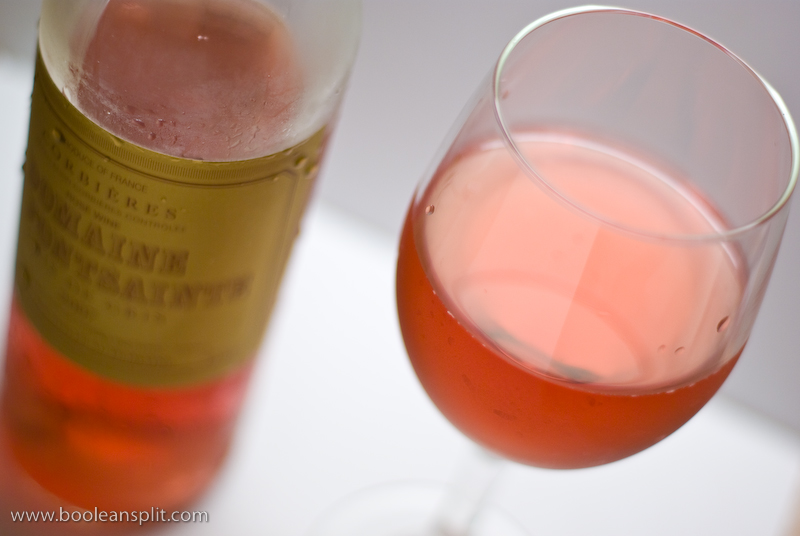
Flushed

ISO 200, 50mm, f/1.7, 1/60sec, IS on

ISO 200, 50mm, f/1.7, 1/60sec, +2 EV, IS on

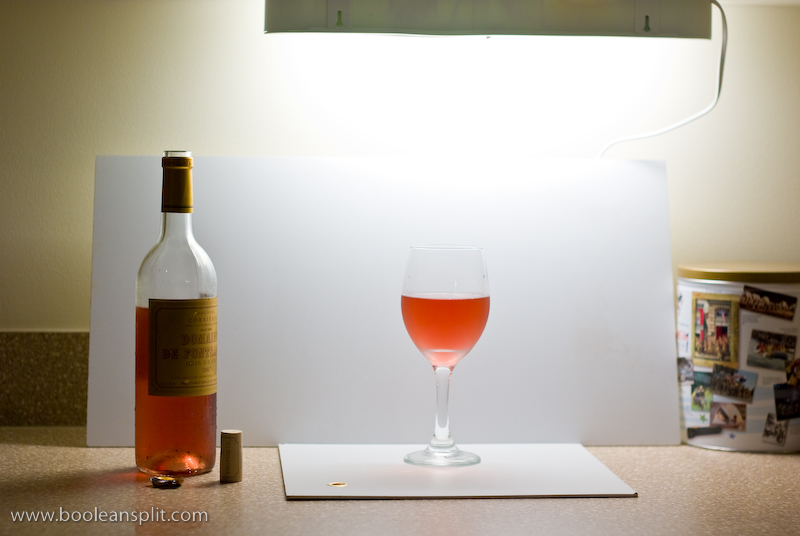
It’s quick and easy to get studio quality lighting in your home with almost no additional expense. Here’s a quick look behind the scenes of this photo:

set up

As you can see, all I did was set up a couple of white boards on the kitchen counter under a fluorescent light. I learned this trick when I was Design Director at Griffin Technology. Most of the pre-2007 product shots were done this way on a cubicle desk using the fluorescent light under the overhead storage bin. I’m happy to say that today Griffin employs a professional photographer and has a full photo studio.

For this shot I dialed in +2 EV exposure compensation to adjust for the all-white background. By shooting RAW I was able to simply click the white balance eye dropper tool in Lightroom on the white background to dial out the color cast of the fluorescent light. I pushed up the exposure an additional +0.83 to get the high key look I was going for. Other than that, all I did was tweak the Vibrance a touch and added a bit of sharpening.

Here’s another composition using the same set up:

wine shot 2

By the way, the subject of these photos is the wonderful Corbières Domaine De Fontsainte Gris de Gris 2007 rosé imported by Kermit Lynch. This is one of my absolute favorite wines. It has a unique combination of dryness and intense fruit flavors. I picked it up for less than $10 at Kroger. Real men drink rosé ;-)

About

I'm an industrial designer and an avid hobbyist photographer. People are always asking me "how'd you do that?" So, I decided to create this site as a place to share my experiences and insights about photography, the gear and what it all means to me. I'm not sure if this site will make anyone besides myself a better photographer but I figure it's worth a try. Take a look around and let me know what you think. Thanks for stopping by!

Subscribe

Recent Posts

Categories

Pages

Flickr Friends

Links

My Sites

Archives