booleansplit.com

photos, tips, tricks, and thoughts from an avid amateur photographer


Posts tagged Pentax K10D

Pentax K10D RAW noise reduction

I shoot a lot of long exposure shots with my Pentax K10D. One of my pet peeves is waiting for the built-in noise reduction to take a 1:1 dark frame subtraction exposure. This ends up doubling the length of time for each shot. Not that big of a deal if you are shooting 1 second exposures but a bit of a PITA if you’re shooting 5 minute bulb shots.

In-camera noise reduction is pretty critical for shooting JPEGs. Sure, you can always shoot your own series of dark frames at different ISOs and use them with 3rd party software to remove hot spots, etc. but this seems a bit extreme. So, I have just left the in-camera NR on and lived with the dark frame subtraction double exposure.

Many times I’ve noticed that there are hot spots in the initial Adobe Lightroom previews of my long exposure RAW files that disappear the first time I zoom in to 100%. This got me to thinking that maybe Lightroom could take care of long exposure noise on its own without the camera’s help. After searching Google in vain for a definitive answer, I decided a quick test was in order. I was pleased to learn that, now that I am shooting exclusively in RAW, I can turn off the in-camera noise reduction on my K10D and eliminate the wait between long exposure shots. (In-camera NR is still recommended for JPEG shooting).

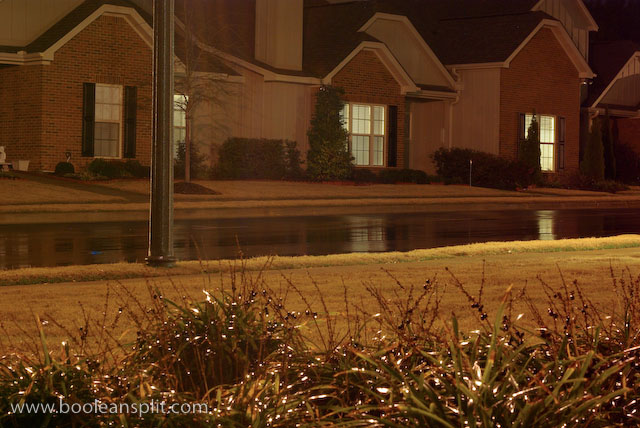
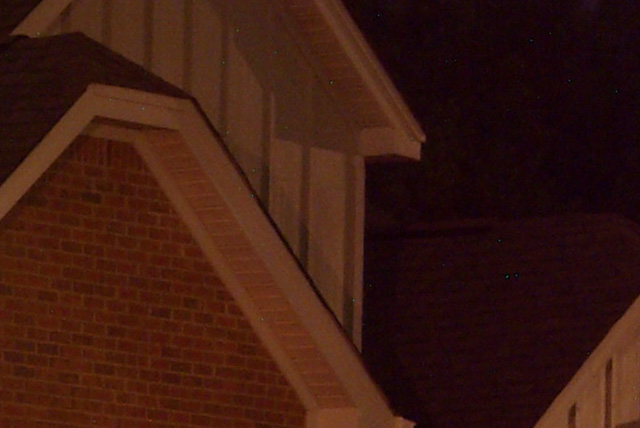
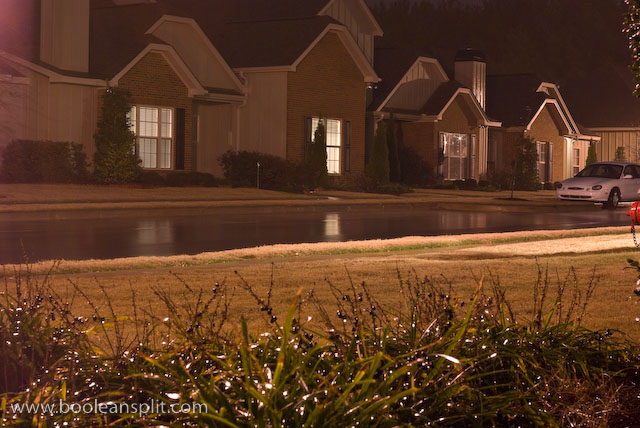
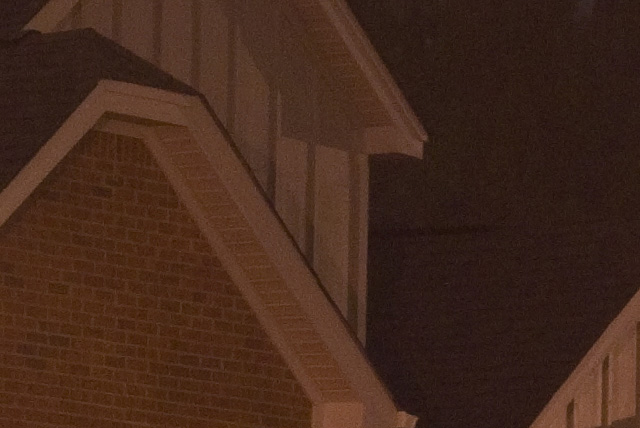
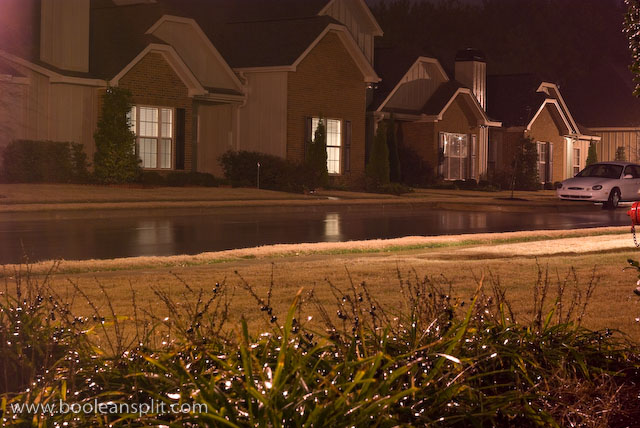
Here’s what I found in the test. All shots are 30 seconds at f/16 and ISO 400 using my 50mm f/1.7 SMC-A lens with only LR’s default processing applied. Sorry for the crude composition…

JPEG with NR OFF

JPEG with NR OFF

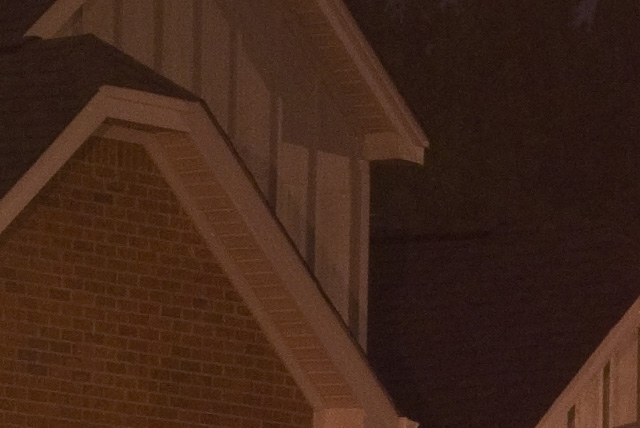
100% crop of JPEG w/ NR OFF

100% crop of JPEG w/ NR OFF

RAW with NR ON

RAW with NR ON

100% crop of RAW w/ NR ON

100% crop of RAW w/ NR ON

RAW with NR OFF

RAW with NR OFF

100% crop of RAW w/ NR OFF

100% crop of RAW w/ NR OFF

From what I could tell from this test, there is virtually no difference in noise between the RAW images with and without in-camera noise reduction. In fact, to me the images without the NR has slightly better contrast and more shadow detail. Keep in mind that these are unprocessed RAW files so I could easily get similar contrast and saturation as the JPEG image while maintaining the greater detail and dynamic range of the RAW images.

What’s in my bag?

what's in my bag?

Jump over to my Flickr page for a detailed listing of what’s in this photo.

Abondoned trailer park

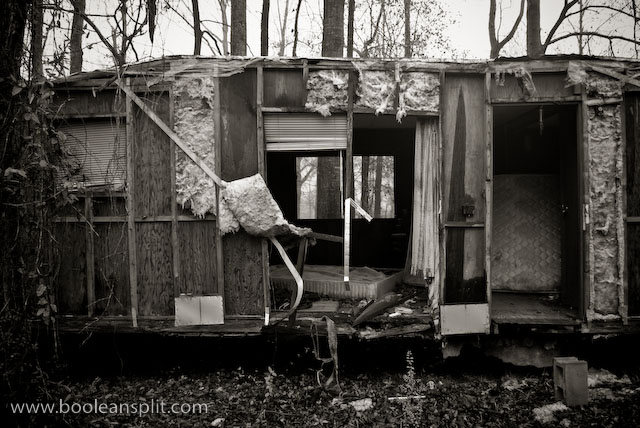
rotting trailer in B&W

I’ve driven past this place a number of times and often thought I should come back with my camera. This morning it was foggy and rainy and I thought “Ah ha! Perfect conditions for the trailer park!” ;-)

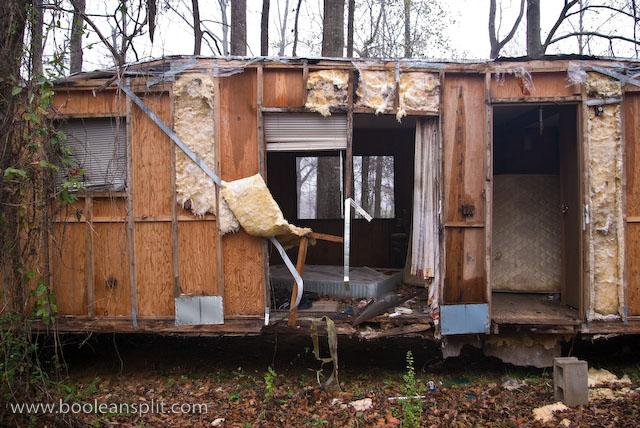
The picture above was heavily processed in grayscale mode in Lightroom. I tweaked just about every slider to get this image. I was going for maximum texture, grime and dynamic range. Here’s the original color version with only minor adjustments applied:

imgp7476-2

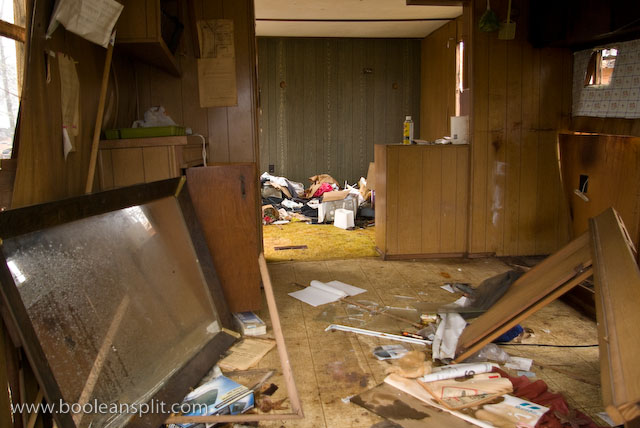
All these images were shot had-held with my Pentax K10D and kit lens at ISO 400 at between 1/13 second to 1/60 second with the IS on. I stopped the lens down to f/5.6-f/8 when I could for optimum sharpness. Here’s a close up of the interior of the trailer above. I did not venture inside as the floor was rotten to the point I was afraid of falling through.

imgp7477

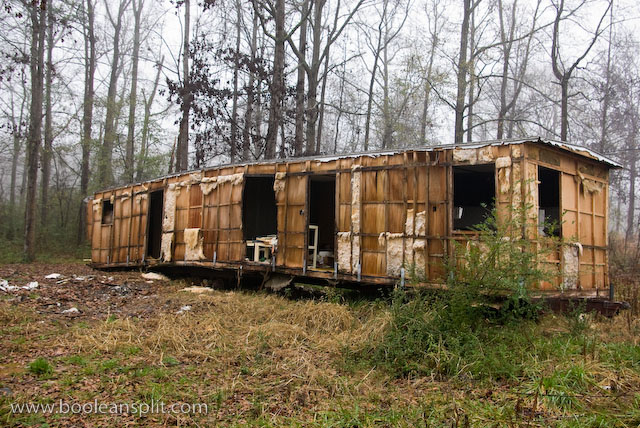
Here’s a wide shot of one of the trailers. The aluminum exterior skin had long been stripped and sold as scrap (I assume):

imgp7468

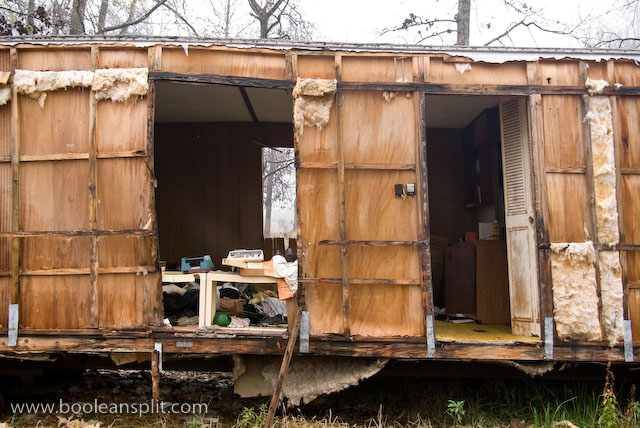
A detail of the trailer in the previous shot:

imgp7472

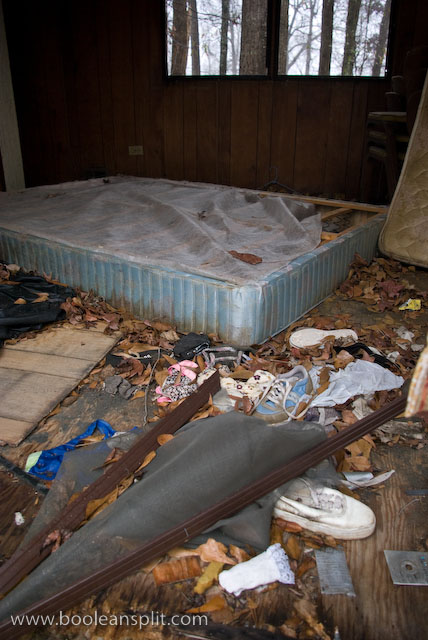
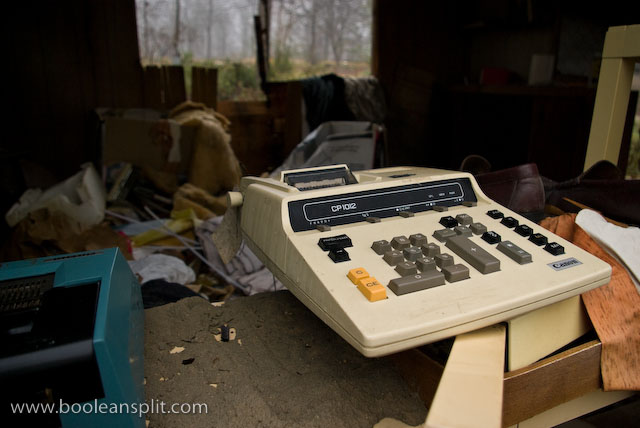
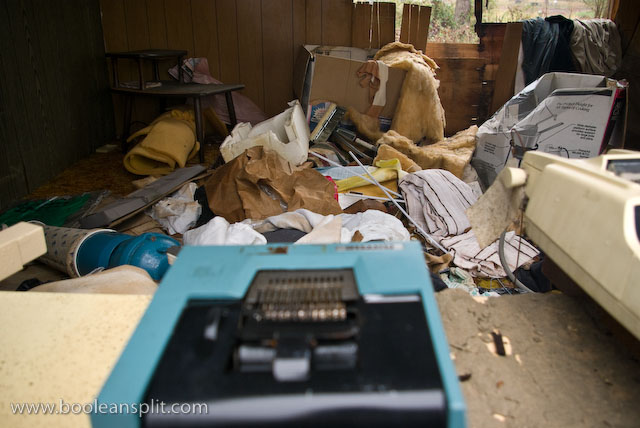
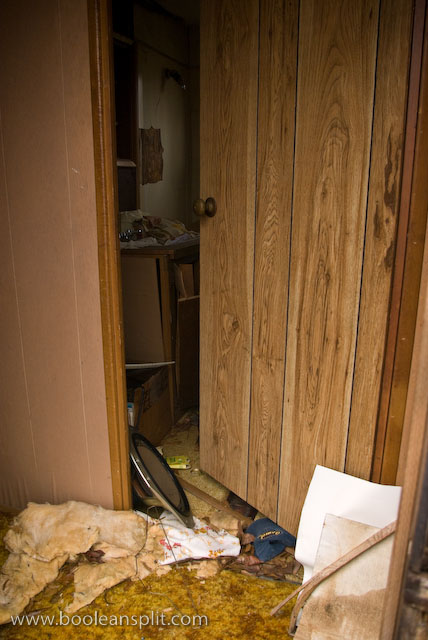
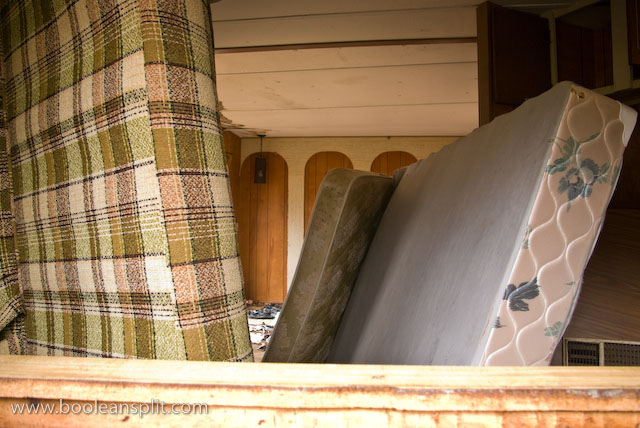
These trailers were surprisingly full of left behind personal possessions:

imgp7473

imgp7469

imgp7474

imgp7475

imgp74791

Nikon 13mm f/5.6 lens review

I’m a wide angle lens freak stuck in a kit lens body. I had a Sigma 10-20mm super wide zoom for my first Pentax K10D and it stayed on more than 50% of the time. Later I rented a Canon 17-40 f/4L for a couple of days in San Francisco and shot a bunch of picts with it on my 5D. Awesome. Here’s a link to some of my wide angle shots on Flickr.

I thought 14mm was as wide as one could go on a full-frame lens. Imagine my surprise when Ken Rockwell posted his review of the extremely rare Nikon 13mm f/5.6 rectilinear fisheye. Check it out. No barrel distortion what so ever. It is truly amazing stuff.

Thanks, Ken!

Take better sunset pictures

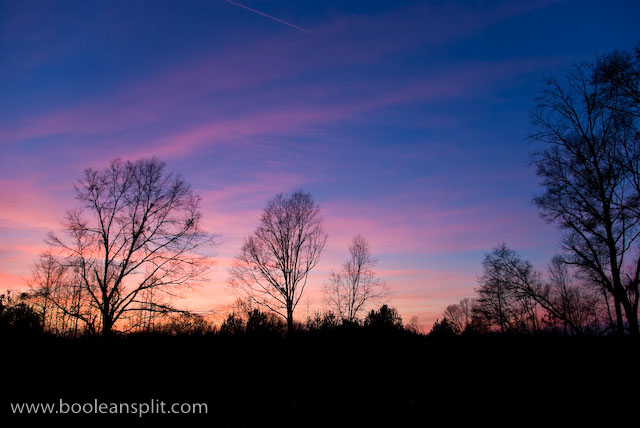
Alabama sunset

There are few things more beautiful than a good sunset or sunrise photograph. However, if you’ve ever tried to do it you know it can be frustrating. How many times have you seen a beautiful sunset like the one above only to have your photo turn out something like this?
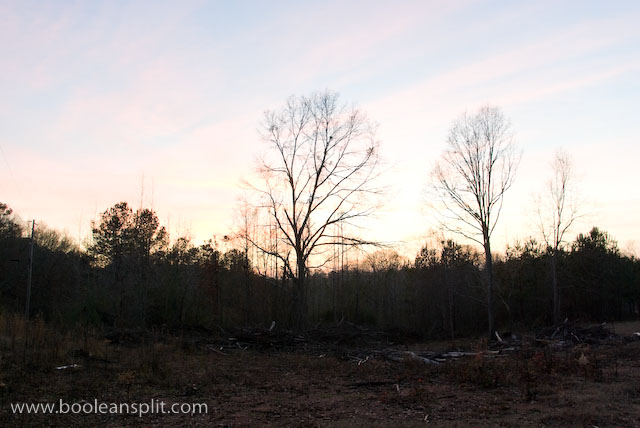
overexposed sunset

There are a couple of easy things you can do to get great sunset photos. First, turn off your flash. The only thing the flash is good for during a sunset is to add fill to illuminate a foreground subject. Unfortunately, getting the right mix of fill flash and background exposure can be very tricky:
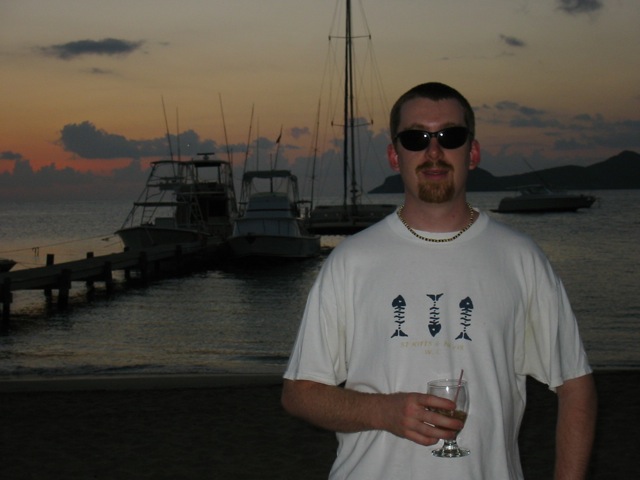
Nevis sunset flash

Not a very inspiring photo (though after the number of rum punches I had I didn’t care). For now, let’s just turn the flash off and focus on capturing a brilliant sunset photo.

Next, set your white balance to auto. You can also try daylight but I have always found the auto setting gives the best mix of deep blues, pinks, reds and oranges.

I like to shoot sunsets with a wide angle lens to get as much of the sky in the picture as possible. This ensures a full mix of colors from the darkest indigo blues overhead to the brightest pinks and oranges at the horizon. Usually I leave only a strip of ground/foreground across the bottom to anchor the photo- letting the sky dominate the scene for maximum impact.

The main challenge with sunset photos is getting around the camera’s matrix metering’s natural tendency to balance exposure across the frame. The camera doesn’t know what’s going on and tries to balance the dark foreground with the bright background. The washed out example at the top is what you get when you just point-n-click. To get a decent sunset exposure you either need to dial in some negative exposure compensation (usually -2/3EV to -1EV). An easier method is to just aim the camera at an unobstructed portion of the sky, focus, lock exposure, recompose, and shoot. I typically use a little of both.

For the best sunset photos I typically like to wait for the sun to be fully below the horizon. That beautiful glowing orange ball of the sun absolutely wrecks exposure on a camera and typically results in pretty disappointing shots. Also, some cloud texture in the sky helps provide a good mix of colors. Be sure to look behind you as many times clouds away from the setting sun pick up some awesome colors. Finally, some good foreground silhouettes can help add additional visual interest (especially helpful if the sky itself is not as dramatic as it could be).
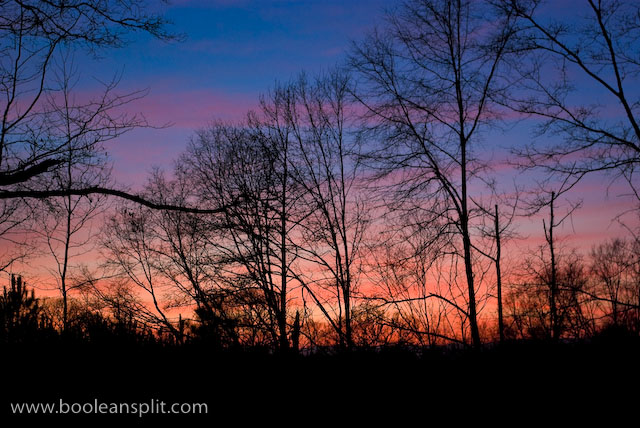
foreground texture sunset

A medium aperture like f/8-f/10 is best to ensure the best detail and sharpness across the frame and eliminate vignetting typical at larger apertures when shooting at a wide zoom setting. Since I generally like to wait for the sun to drop fully, there’s typically not very much ambient light. This means I either need to be shooting on a tripod at a low ISO and slow shutter speed or bump the ISO up to prevent camera shake. These samples were all shot hand-held at ISO 200-400 and f/8 and f/10 at around 1/4 second. The combination of the K10D’s in-body IS and the wide focal length meant it only took a few tries to get sharp shots (wider zoom angles can be hand held at slower shutter speeds than longer ones).

Typically a properly shot sunset photo doesn’t require much post-processing. Since I shoot everything in RAW I have to tweak sharpness and saturation on all my photos in Lightroom. I can also play around with the white balance a bit to get the best pop from my images- though the as-shot (Auto) setting worked best for these images. Often I find the fluorescent WB preset works well for sunsets for some reason.

While a DSLR gives the most control over all of these settings, I have gotten wonderful sunset photos with a pocket camera by simply turning off the flash and using the focus, recompose and shoot method. Here is a collection of some of my other sunset photos on Flickr.

The most difficult part about getting good sunset shots is being at the right place at the right time with your camera. I hope this helps you get that great shot the next time that happens!

About

I'm an industrial designer and an avid hobbyist photographer. People are always asking me "how'd you do that?" So, I decided to create this site as a place to share my experiences and insights about photography, the gear and what it all means to me. I'm not sure if this site will make anyone besides myself a better photographer but I figure it's worth a try. Take a look around and let me know what you think. Thanks for stopping by!

Subscribe

Recent Posts

Categories

Pages

Flickr Friends

Links

My Sites

Archives